Community doesn’t require extroversion. It requires a little intention, especially in the first weeks. Here’s what actually works:
1. Show Up to Clubhouse Events — Even Just Once
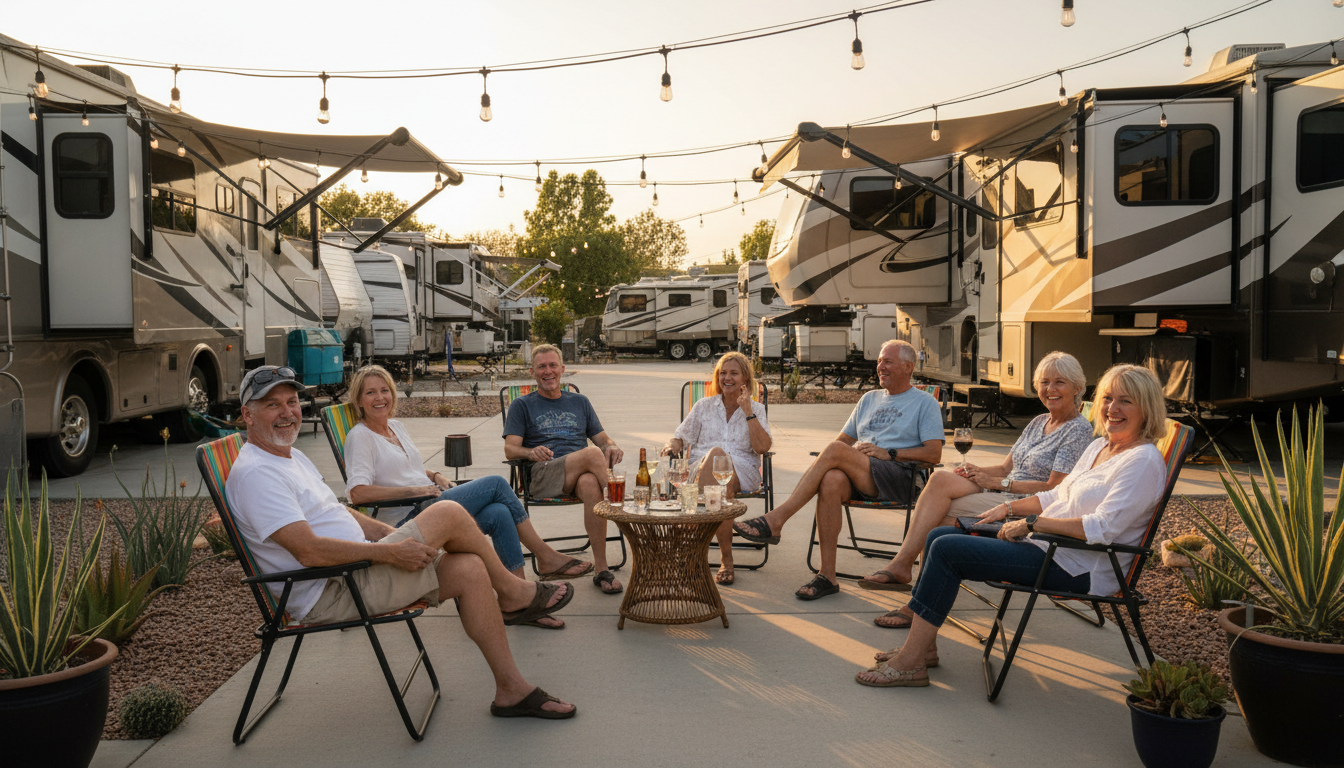
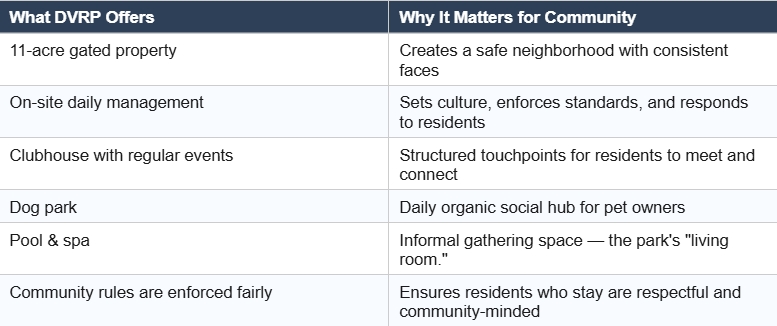
The easiest way to meet people is to go where people already are. You don’t need to be outgoing. You just need to show up. Clubhouse events at well-run parks are low-pressure — residents who’ve lived there for years remember what it felt like to be new, and most will introduce themselves first.
2. Let the Dog Park Do the Work
If you have a dog, your social life is largely sorted. Dog parks are one of the most reliable community generators in any residential setting because dogs break the ice instantly. Within two weeks of regular morning visits, you’ll know the names of the dogs — and their owners — better than you’d expect.
3. Introduce Yourself in the First Week
A knock on a neighboring RV’s door in your first week costs nothing and signals to long-term residents that you’re part of the community, not just passing through. Social networks in RV communities tend to be warm and quick to expand once you make the first move.
4. Use Shared Spaces as a Default
Remote workers, retirees, and anyone who spends a lot of time inside their RV are at risk of social isolation — not because the community isn’t there, but because they never leave to find it. Build the pool, the spa, and the outdoor areas into your daily routine. For remote workers specifically, the DVRV guide on RV living for remote workers covers how to structure your workday around the park’s shared spaces without sacrificing productivity.
5. Offer Help Before You Need It
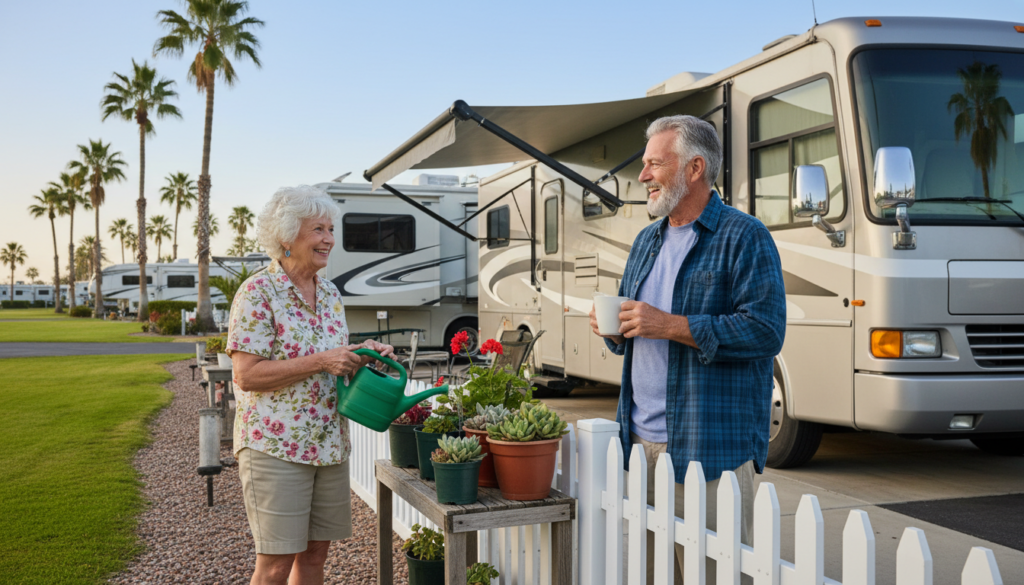
RV communities operate on informal reciprocity. Offering to help a neighbor with a minor repair, keeping an eye on someone’s rig while they’re away, or sharing vegetables from a container garden builds trust faster than any organized event. That reputation, built in small moments, is the bedrock of belonging.
Retirees and Snowbirds
For retirees, the daily rhythm of RV park social life often replaces the social structure that came with a career. Regular faces, shared routines, and informal neighbor check-ins provide daily human contact that’s genuinely difficult to replicate elsewhere. Clubhouse events and pool gatherings become anchoring social rituals for many long-term residents. See also: 7 Benefits of Extended Stay RV Living in California.
Remote Workers
Working from home inside an RV can blur the line between productive solitude and actual isolation. Having a community that steps outside your door creates a healthy boundary. See how remote workers are thriving in long-term RV parks.
Traveling Healthcare Workers and Professionals
If you’re on a three-month assignment near Hemet or the surrounding Inland Empire area, a long-term RV park gives you something a hotel cannot: a neighborhood. Familiar faces that make a temporary stay feel less like a hotel checkout. Read more: Long-Term RV Parks vs. Villas: What You Need to Know.
People in Life Transition
For people who have recently downsized or are navigating a major life change, the community of a long-term RV park can be unexpectedly grounding. The park doesn’t require a long-term lease, but it offers the daily familiarity that makes transition manageable. Explore what the San Jacinto area offers long-term residents.