Diamond Valley RV Park logo

How to Make Friends and Build Community in an RV Park

One of the most persistent myths about long-term RV living is that it’s lonely. That you’ll end up parked in a sea of strangers, isolated behind your door with nothing but the hum of your air conditioner and a neighbor who never waves.

The reality, for thousands of residents across well-run long-term RV communities in Southern California, is almost the opposite. RV parks — real ones, with on-site management, shared amenities, and a stable resident base — produce some of the most genuinely connected communities many residents have ever lived in.

This isn’t accidental. The physical design of a well-maintained park, the shared routines that emerge naturally around common spaces, and the culture created by consistent management all add up to something that apartment buildings almost never achieve: a neighborhood where people actually know each other.

At Diamond Valley RV Park in San Jacinto, CA, community is one of the main reasons residents choose to stay — not just for weeks or months, but year after year. This guide explains exactly how RV park community living works, and what you can do from your very first week to feel genuinely at home.

Why RV Park Living Is Naturally Built for Community

Think about the last time you introduced yourself to a neighbor in an apartment building. For most people, that interaction either never happened or felt forced and awkward. Apartment design works against connection — long hallways, separate entrances, minimal shared space, and a culture where no one expects to stay long enough to make it worth the effort.

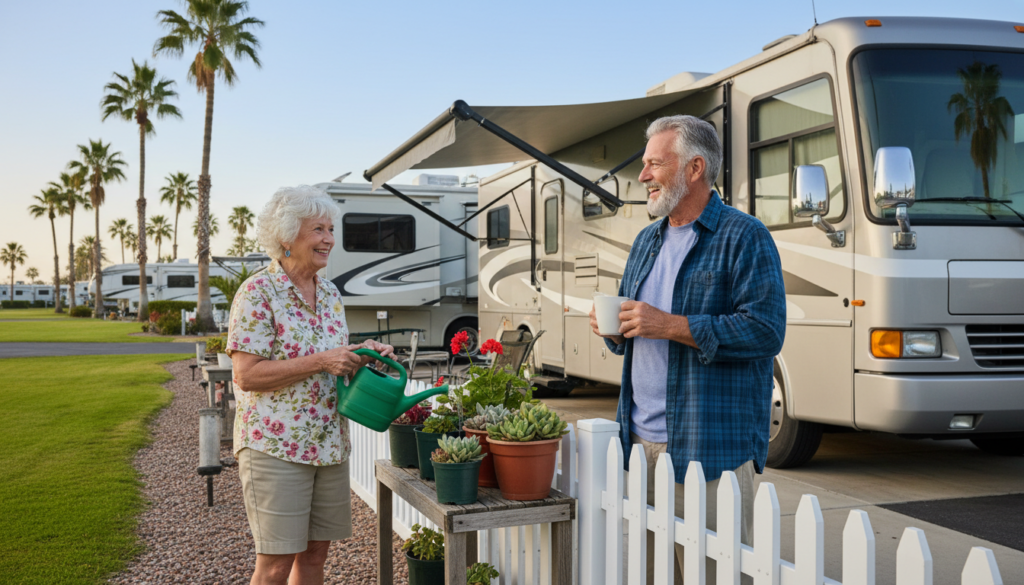
RV parks are structurally different. When you live in a park with a dog park, a pool, a clubhouse, and common outdoor areas, you encounter your neighbors every single day — not because you planned to, but because life in a shared space naturally generates contact. You see the same faces at the dog park every morning. You nod to the same couple at the pool on Sunday afternoons. Over days and weeks, those nods become conversations, and those conversations become something that feels surprisingly like friendship.

The key variable is the stability of the resident base. A park full of weekend campers produces no lasting community — everyone is gone by Monday. A long-term park, where residents stay for months or years, creates the conditions for real relationships to form. That’s the difference between a campground and a community.

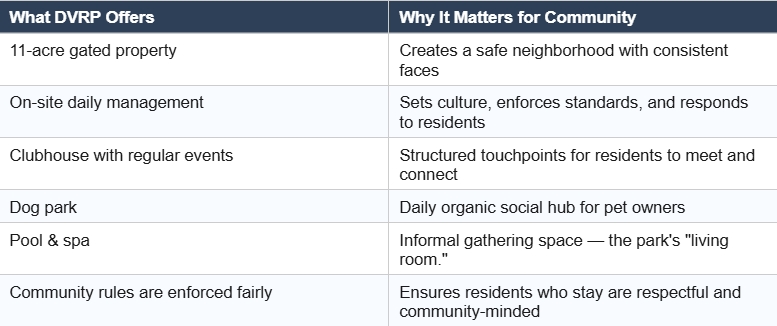
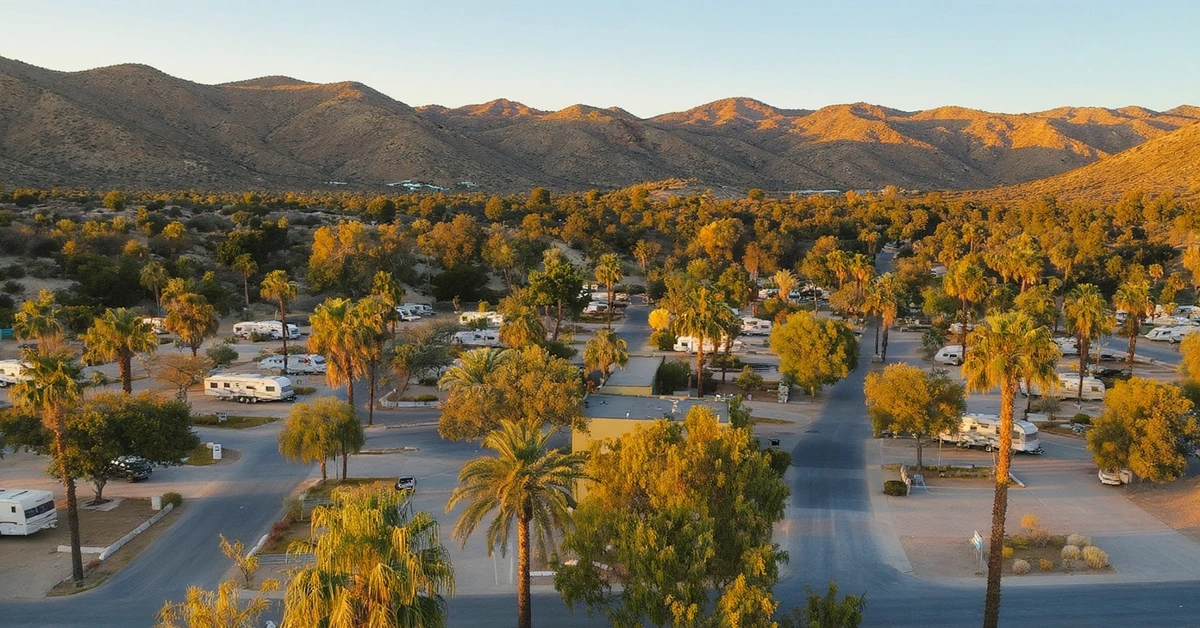
Diamond Valley RV Park’s 11-acre gated property includes infrastructure specifically designed to bring people together: a clubhouse with regular events, a dog park that draws residents daily, and a pool and spa that serve as the park’s informal living room. These aren’t perks — they’re the architecture of community life.

The Role of Management in Creating Community Culture

Here’s something most prospective residents don’t consider until they’ve lived in multiple parks: management quality determines community quality more than any physical amenity.

An attentive, on-site management team sets the tone for how residents treat each other, how quickly problems get resolved, and whether the park feels like a place worth investing in socially. A well-run park enforces community standards consistently — which means the residents who stay are the kind of neighbors you actually want.

At DVRV, on-site management is consistently cited by long-term residents as the park’s defining strength. One resident described the team as people who “will do anything to help you and bend over backwards to make you feel comfortable.” That culture flows outward — when management treats residents with respect and responsiveness, residents extend the same to each other.

5 Practical Ways to Build Real Friendships at an RV Park

Community doesn’t require extroversion. It requires a little intention, especially in the first weeks. Here’s what actually works:

1. Show Up to Clubhouse Events — Even Just Once

The easiest way to meet people is to go where people already are. You don’t need to be outgoing. You just need to show up. Clubhouse events at well-run parks are low-pressure — residents who’ve lived there for years remember what it felt like to be new, and most will introduce themselves first.

2. Let the Dog Park Do the Work

If you have a dog, your social life is largely sorted. Dog parks are one of the most reliable community generators in any residential setting because dogs break the ice instantly. Within two weeks of regular morning visits, you’ll know the names of the dogs — and their owners — better than you’d expect.

3. Introduce Yourself in the First Week

A knock on a neighboring RV’s door in your first week costs nothing and signals to long-term residents that you’re part of the community, not just passing through. Social networks in RV communities tend to be warm and quick to expand once you make the first move.

4. Use Shared Spaces as a Default

Remote workers, retirees, and anyone who spends a lot of time inside their RV are at risk of social isolation — not because the community isn’t there, but because they never leave to find it. Build the pool, the spa, and the outdoor areas into your daily routine. For remote workers specifically, the DVRV guide on RV living for remote workers covers how to structure your workday around the park’s shared spaces without sacrificing productivity.

5. Offer Help Before You Need It

RV communities operate on informal reciprocity. Offering to help a neighbor with a minor repair, keeping an eye on someone’s rig while they’re away, or sharing vegetables from a container garden builds trust faster than any organized event. That reputation, built in small moments, is the bedrock of belonging.

How Community Looks Different for Different Residents

Retirees and Snowbirds

For retirees, the daily rhythm of RV park social life often replaces the social structure that came with a career. Regular faces, shared routines, and informal neighbor check-ins provide daily human contact that’s genuinely difficult to replicate elsewhere. Clubhouse events and pool gatherings become anchoring social rituals for many long-term residents. See also: 7 Benefits of Extended Stay RV Living in California.

Remote Workers

Working from home inside an RV can blur the line between productive solitude and actual isolation. Having a community that steps outside your door creates a healthy boundary. See how remote workers are thriving in long-term RV parks.

Traveling Healthcare Workers and Professionals

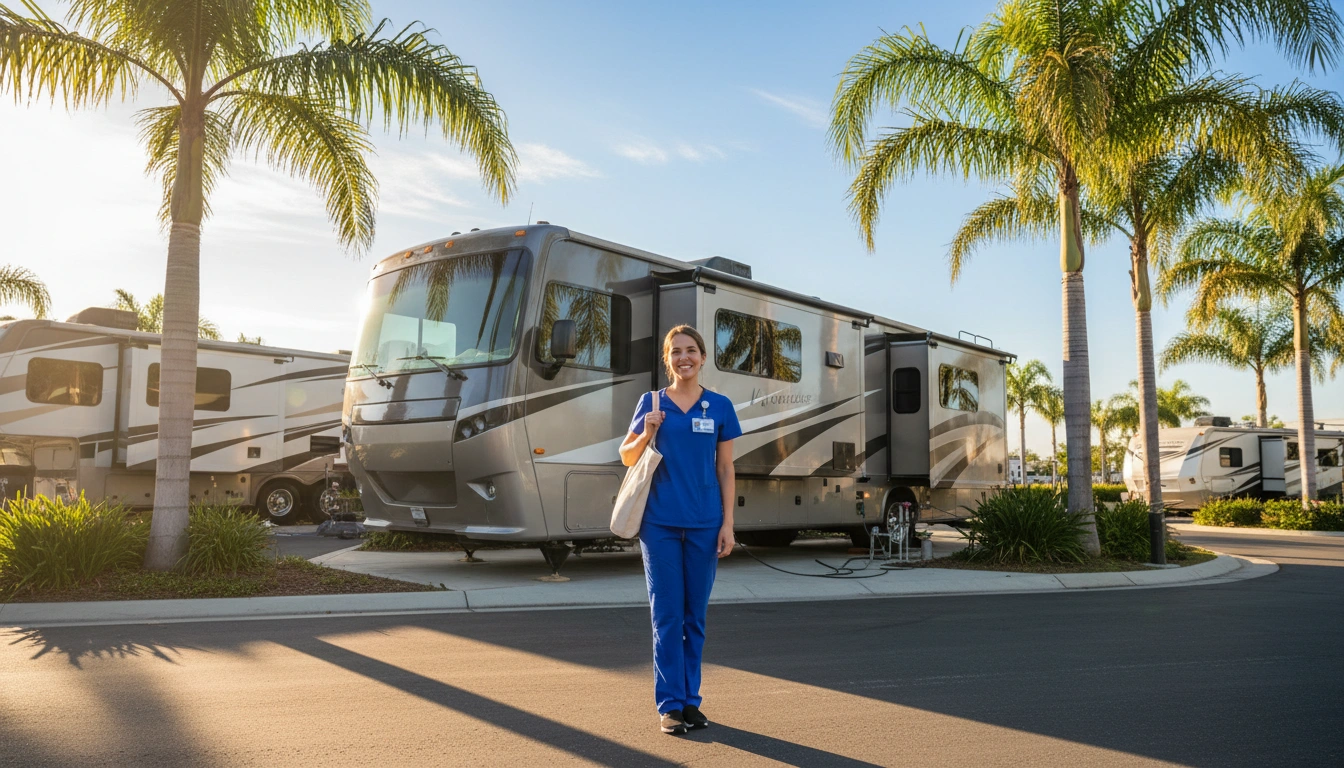
If you’re on a three-month assignment near Hemet or the surrounding Inland Empire area, a long-term RV park gives you something a hotel cannot: a neighborhood. Familiar faces that make a temporary stay feel less like a hotel checkout. Read more: Long-Term RV Parks vs. Villas: What You Need to Know.

People in Life Transition

For people who have recently downsized or are navigating a major life change, the community of a long-term RV park can be unexpectedly grounding. The park doesn’t require a long-term lease, but it offers the daily familiarity that makes transition manageable. Explore what the San Jacinto area offers long-term residents.

What Sets Diamond Valley RV Park Apart as a Community

Addressing the Loneliness Concern — Honestly

No community is a guarantee against loneliness. Some residents prefer quiet,  limited interaction, and that preference is respected at well-run parks. But for residents who are open to connection — who show up to one event, who say hello at the dog park, who spend a Tuesday afternoon at the pool — the loneliness concern fades quickly.

Within weeks, most new residents at DVRP report knowing more of their neighbors by name than they did in years of apartment living. The park doesn’t require you to be someone different. It just requires you to be present.

Scroll to Top