Diamond Valley RV Park logo

The RV Maintenance Checklist Every Long-Term Resident Should Follow

There’s a meaningful difference between someone who lives in their RV for a two-week road trip and someone who calls it home year-round. The weekend camper can afford to ignore a slow-draining gray tank or a slightly soft roof seal for one more trip. The long-term resident cannot.

Full-time and long-term RV living is genuinely comfortable and cost-effective — but only when the rig is maintained with the same regularity that a homeowner applies to a house. A $40 tube of lap sealant applied on a Saturday afternoon is a very different conversation than a $2,000 delaminated wall from water intrusion that sat unaddressed for a season.

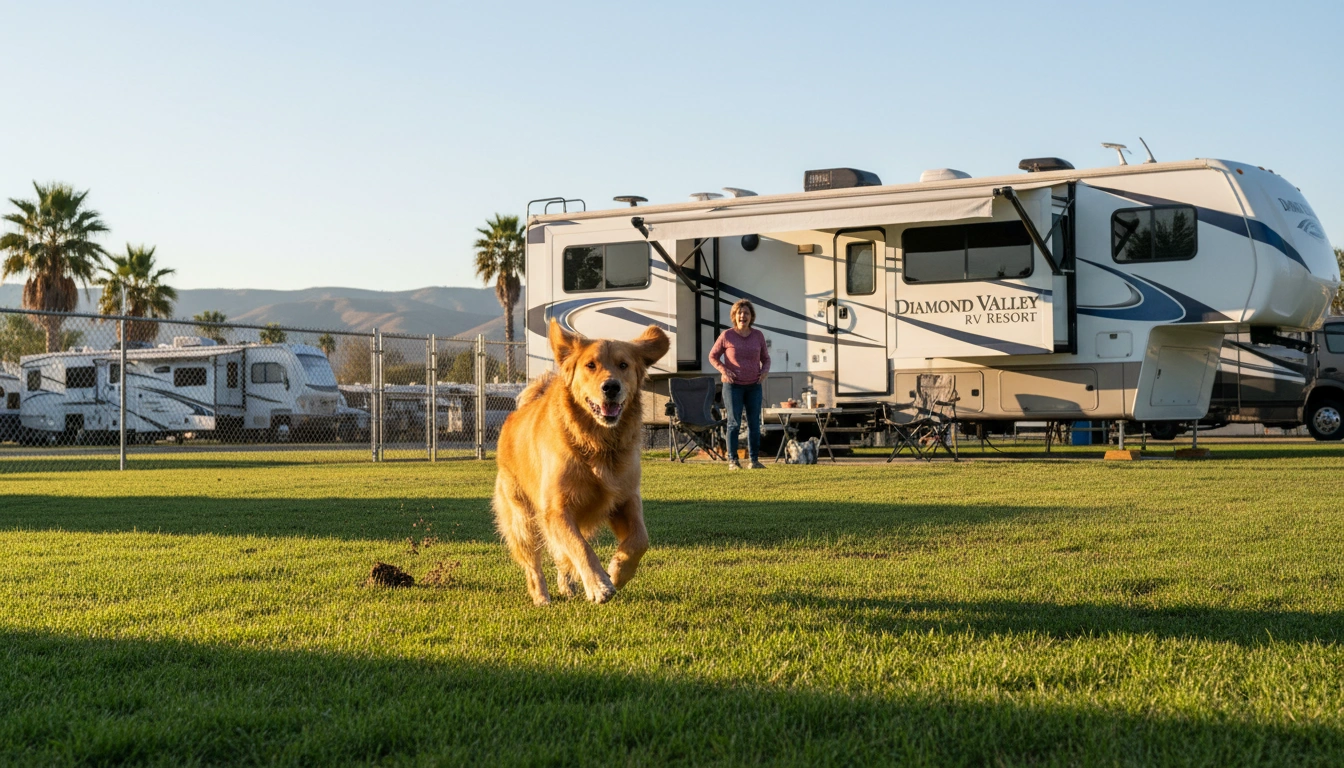
This checklist is built for long-term residents — people living in their RVs for months or years at parks like Diamond Valley RV Park in San Jacinto — who want a practical, recurring maintenance schedule to protect their investment and keep daily life running smoothly.

Why Long-Term RV Residents Face Different Maintenance Demands

Stationary living changes what wears first. When an RV is parked in one position for months, UV exposure and environmental factors differ significantly from a rig in regular travel. Tires develop flat spots from stationary loading. Roof seals that would be “good enough” for one trip per year can fail under sustained UV exposure in Southern California’s high-UV climate.

Hookup life adds its own variables. Full hookup living at a long-term park means your water lines are under continuous pressure, your electrical system draws from shore power daily, and your sewer connection is in constant use. Each creates wear patterns that occasional campers never encounter.

The Metropolitan Water District manages Diamond Valley Lake and publishes seasonal trail conditions on their site. A vehicle/parking fee applies at dvmarina.com; no advance reservation is needed for trail access alone. DVRP residents are approximately 5 minutes from the marina.

Monthly Maintenance: 30-Minute Walk-Around

Once a month, set aside 30 minutes for a systematic walk-around inspection. Most items take less than two minutes to check. Catching a small problem in this pass saves significant time and money downstream.

Exterior

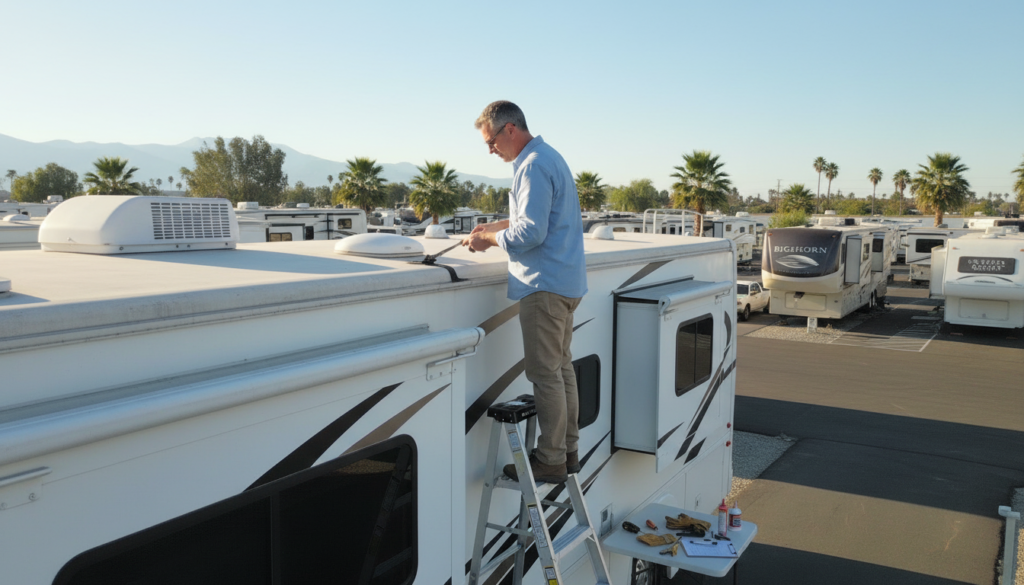
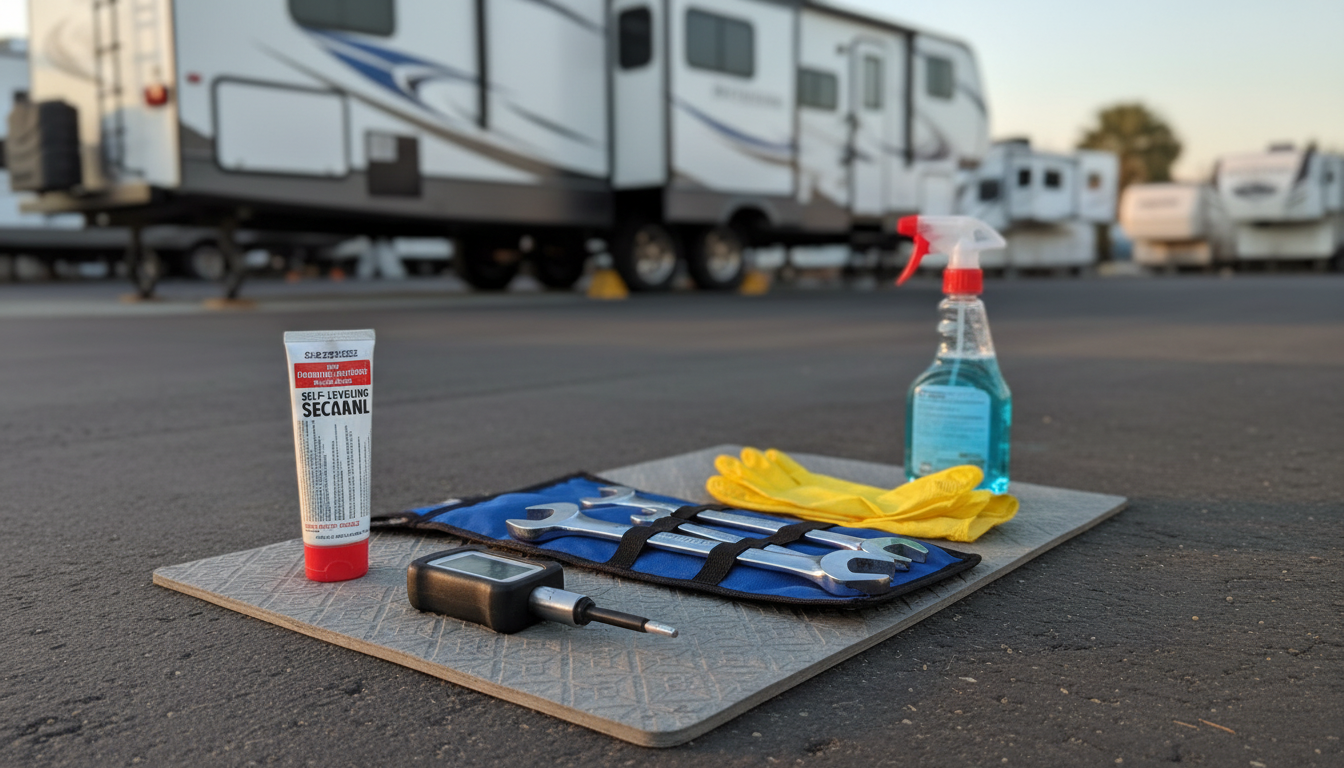
  • Roof seals and caulking: Inspect all seams, vents, skylights, and AC unit bases for cracking, lifting, or gaps. Dicor self-leveling lap sealant is the industry standard for rubber (EPDM/TPO) roofs. Southern California’s UV intensity degrades standard sealants faster than most manufacturers’ timelines assume — inspect monthly without exception.
  • Slide-out seals: Wipe slide-out rubber seals with a UV protectant. 303 Aerospace Protectant is widely used by full-time residents for extending slide seal and tire sidewall life in high-UV environments. Inspect for cracks or gaps where the slide contacts the seal.
  • Exterior body panels and seams: Look for any new separation at panel joints, which can indicate underlying structural movement or beginning water intrusion.
  • Awning fabric and arms: Check fabric for tears or UV degradation. Ensure the awning arms move freely and the locking mechanism engages cleanly.

Tires

  • Pressure check: Even stationary RVs lose pressure over time. Check all tires — including the spare — monthly. Running at the correct PSI is the single most effective way to prevent premature tire failure in a stationary RV.
  • Sidewall inspection: Look for cracking, crazing, or bubbling in the sidewall rubber. Tire covers extend sidewall life significantly for long-term parked rigs — available at any RV supply store or camping retailer.
  • Flat spot monitoring: If your rig has been in the same position for 3+ months, move it slightly (a few inches forward or back) to redistribute the weight contact point on the tire footprint.

Water and Plumbing

  • Visible connections: Inspect the fresh water hookup connection for drips or mineral buildup. A quality pressure regulator is highly recommended for all long-term hookup situations — most parks run at varying pressures and an unregulated connection can cause internal plumbing damage over time.
  • Sewer connection: Inspect the connection point and any visible hose runs for cracking or separation. A failed sewer connection is unpleasant in every way.

Quarterly Maintenance: Seasonal Deep Check

Every three months — aligned with the seasons — run through this deeper inspection pass. Spring (before the heat), summer (heat management), fall (before winter moisture), and winter (cold and damp) each have distinct priorities.

Roof — Full Inspection

  • Walk the roof (if structurally rated): Inspect every inch of roof membrane for soft spots, bubbling, or delamination.
  • Reseal proactively: Apply a fresh thin bead of compatible sealant over existing seams. In Southern California’s climate, this is inexpensive insurance against water intrusion.
  • Check AC unit mounting: Ensure AC unit(s) are seated correctly on their gasket — a loose AC unit is a primary source of roof water intrusion in stationary RVs.

Slide-Outs

  • Exercise slide mechanisms: Run every slide-out through its full range of motion quarterly, even if you don’t regularly use them. Motors and mechanisms that sit static can develop binding issues.
  • Inspect slide-out floor seam: Look for water staining or delamination where the slide floor meets the main floor — a common water entry point on improperly sealed slides.

Electrical

  • Shore power connection: Inspect the power cord for any heat discoloration or damage at the connection point. A degraded connection under continuous load is a fire risk — inspect every quarterly cycle without exception.
  • Battery condition: Check battery terminals for corrosion and verify charge state.
  • Smoke and CO detectors: Press-test all smoke and carbon monoxide detectors. The NFPA recommends replacing CO detector units at 5 years regardless of apparent function — sensors degrade even when the unit appears to work.

Propane System

  • Leak test: Apply soapy water to all propane connections and check for bubbling while the system is pressurized. Replace any leaking component immediately.
  • Regulator inspection: Regulators have a typical 10-year service life. Replace proactively as you approach that age.

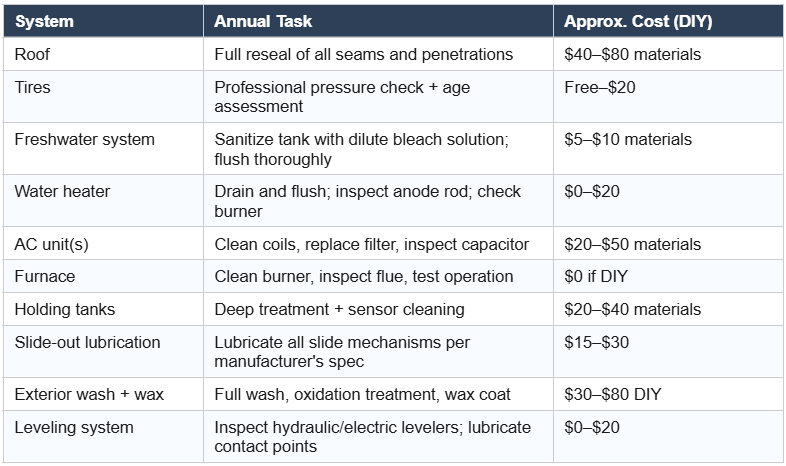
Annual Maintenance: Full-System Service

Long-Term Parking Specific: What Most Guides Miss

Underbelly and Frame

A stationary rig accumulates ground moisture against its underbelly in ways a traveling rig doesn’t. Inspect annually for water damage or pest intrusion. Rodent entry through underbelly gaps is a significant issue in outdoor parking environments — steel wool and appropriate caulking at any gap larger than a pencil diameter is standard preventive practice. Good Sam’s RV service network can assist with underbelly inspections and repairs if you need professional support.

UV Protection

Southern California’s UV index is among the highest in the continental US — the EPA UV Index data regularly records levels of 9–11+ across the Inland Empire from March through October. In addition to tire covers, consider UV-protective window film or exterior covers for windows receiving sustained direct sun. A quality RV wax with UV inhibitors applied annually makes a visible difference in finish longevity.

Leveling and Weight Distribution

The open space network surrounding the hills east of downtown San Jacinto offers miles of ridge walking and canyon hiking with mountain views that rival anything in the region. Spring — before summer heat sets in — is the optimal season. Early morning hikes between 6 and 9 AM offer cool temperatures and abundant wildlife activity. For trail discovery and GPS maps of the broader network, AllTrails has user-reviewed routes throughout the San Jacinto Mountains area.

Resources Near Diamond Valley RV Park

Hemet and the San Jacinto Valley have solid RV service infrastructure. For parts and supplies, Camping World has locations within the region carrying most standard maintenance materials including lap sealant, slide seal treatment products, and tire covers. For professional service, several independent RV service shops operate in the Hemet area.

For questions about on-site maintenance at Diamond Valley RV Park, contact the management team: (951) 654-0670, Mon–Fri, 9 AM – 4 PM.

Scroll to Top