Diamond Valley RV Park logo

RV Park vs. Mobile Home Park: What's the Real Difference?

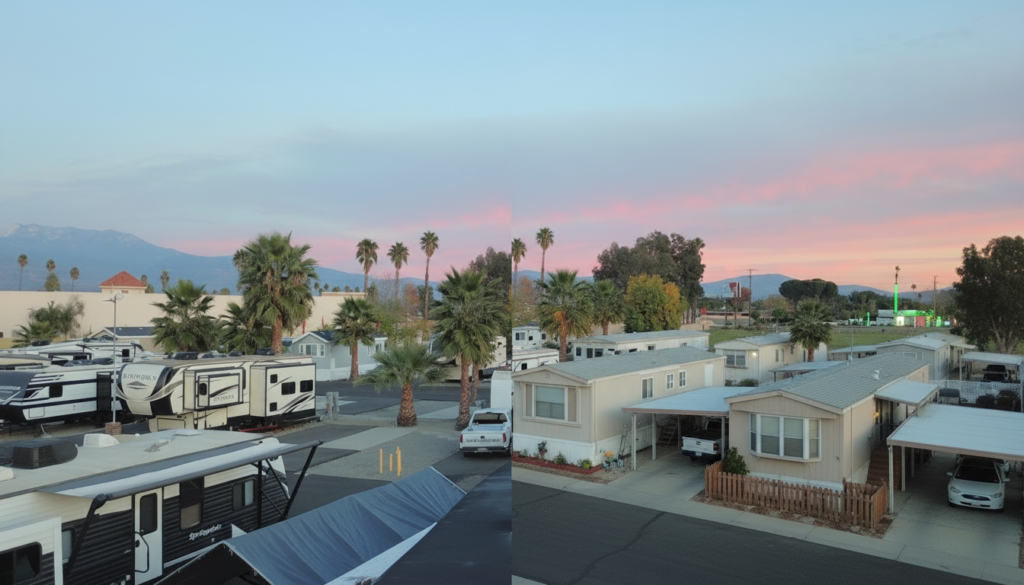
If you’ve been researching affordable long-term housing in Southern California, you’ve likely come across both RV parks and mobile home parks as options. From a distance, they can seem interchangeable — both offer alternatives to apartment renting, both involve living on a lot, and both tend to cost significantly less than standard apartment rents in the same region.

But the differences between them are substantial — in cost, flexibility, legal structure, and community character. Choosing the wrong type for your situation can cost you time, money, and peace of mind.

This guide breaks down the real distinctions between RV parks and mobile home parks so you can make a clear-headed decision. For long-term residents considering Diamond Valley RV Park in San Jacinto, CA, the comparison is particularly relevant.

The Fundamental Difference: Ownership Structure

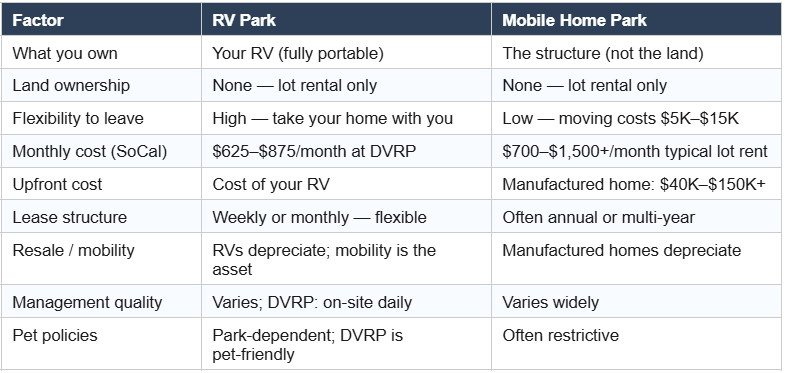
In a mobile home park, you typically own the structure (the manufactured home) but rent the land it sits on. This creates a complicated middle ground: you carry the long-term financial commitment of homeownership — purchase price, maintenance costs, potential mortgage — without the land security that makes traditional homeownership valuable.

According to the Manufactured Housing Institute (MHI), approximately 22 million Americans live in manufactured housing — and the majority face the recurring challenge of rising lot rents they cannot negotiate because they cannot easily move their home. Moving a manufactured home typically costs $5,000–$15,000 and requires specialized transport, permits, and a destination park willing to accept the structure.

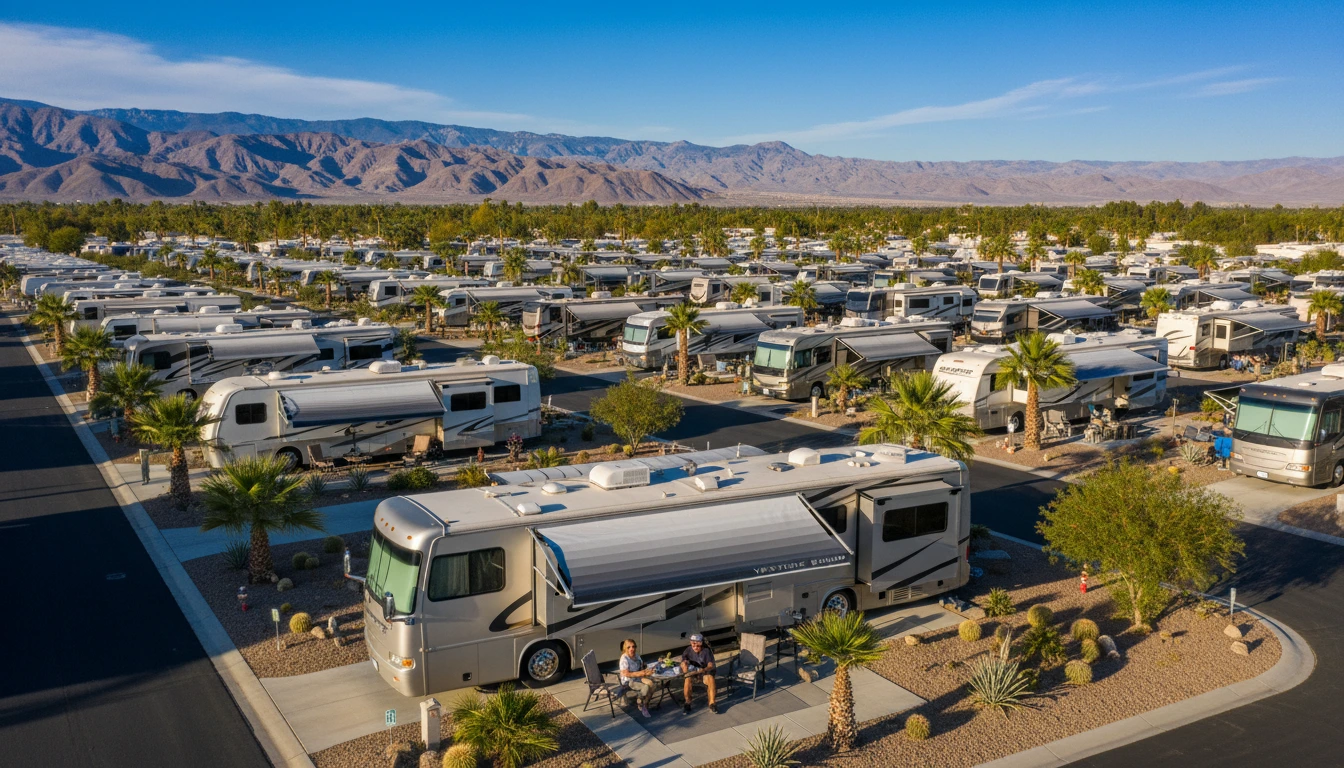
In an RV park, you own your RV outright and rent the lot space on flexible terms. Your home goes wherever you go. If the park doesn’t meet your needs, you leave — without the financial and logistical complications of relocating a structure designed to stay in one place. That mobility is one of the most underrated advantages of the RV park model.

Side-by-Side Comparison: RV Park vs. Mobile Home Park

Cost: The Numbers Side by Side

For most people researching affordable housing alternatives in Southern California, cost is the primary driver. Here’s how the two models compare in practical terms.

RV park (long-term):

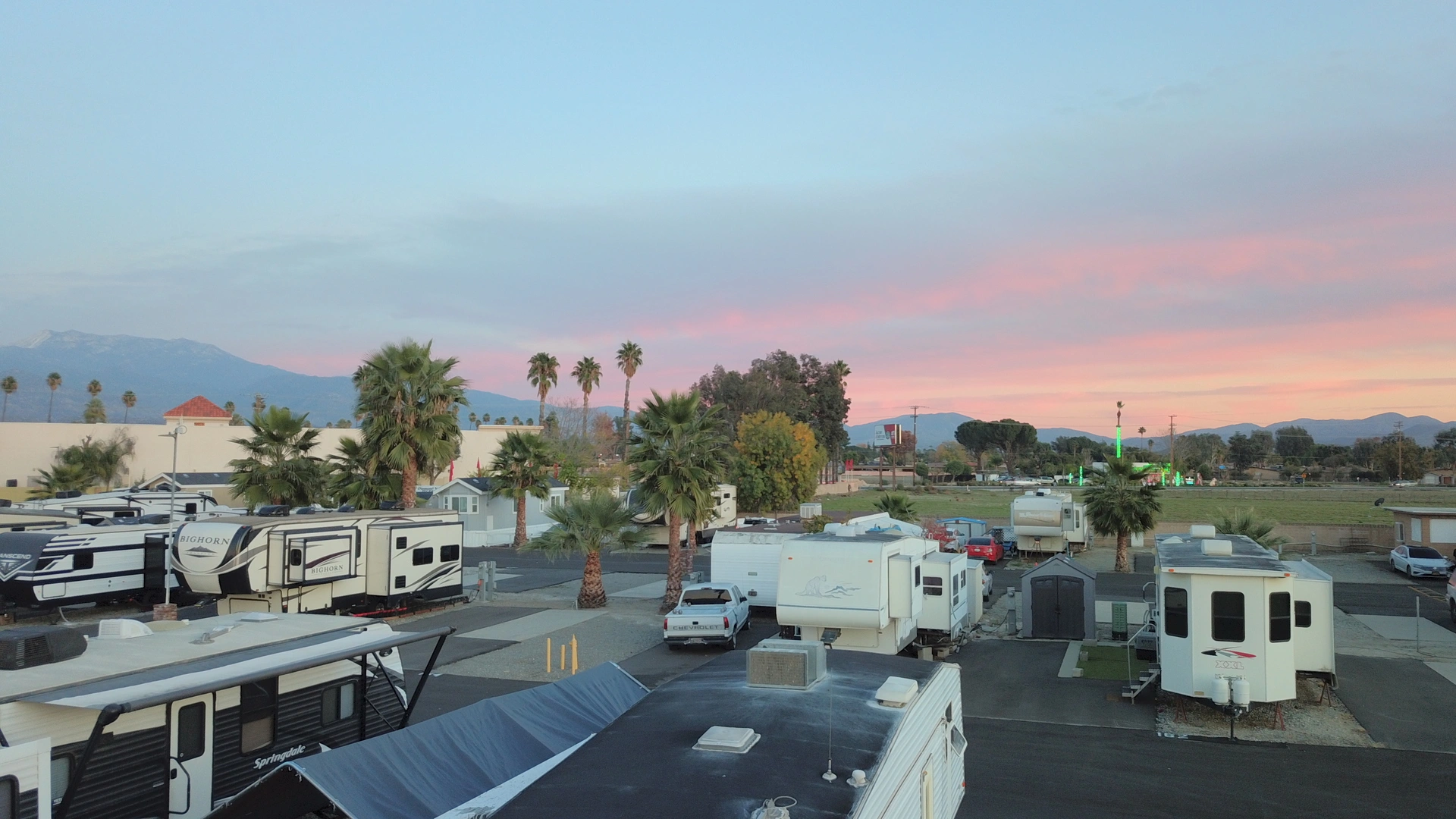
At Diamond Valley RV Park, monthly lot rates run $625–$875/month depending on site and RV size, with sewer included. Water is $20/month. Electricity is metered at Southern California Edison residential rates. No long-term lease required. See current DVRV rates.

Mobile home park (long-term):

Monthly lot rents in Riverside County typically run $700–$1,200/month for established parks — and up to $1,500+ in higher-demand areas. The California Department of Housing and Community Development (HCD) oversees manufactured and mobile home regulations including the Mobile Home Residency Law (MRL), which sets minimum notice requirements for rent increases and evictions — but these protections vary significantly by city and county.

Flexibility: The Advantage Most People Don't Appreciate Until They Need It

Mobile home parks market themselves as affordable stability — and for residents who want to stay in one place for a decade or more, they can deliver that. But the stability of a mobile home park is one-sided: it’s easy to stay, and very hard to leave.

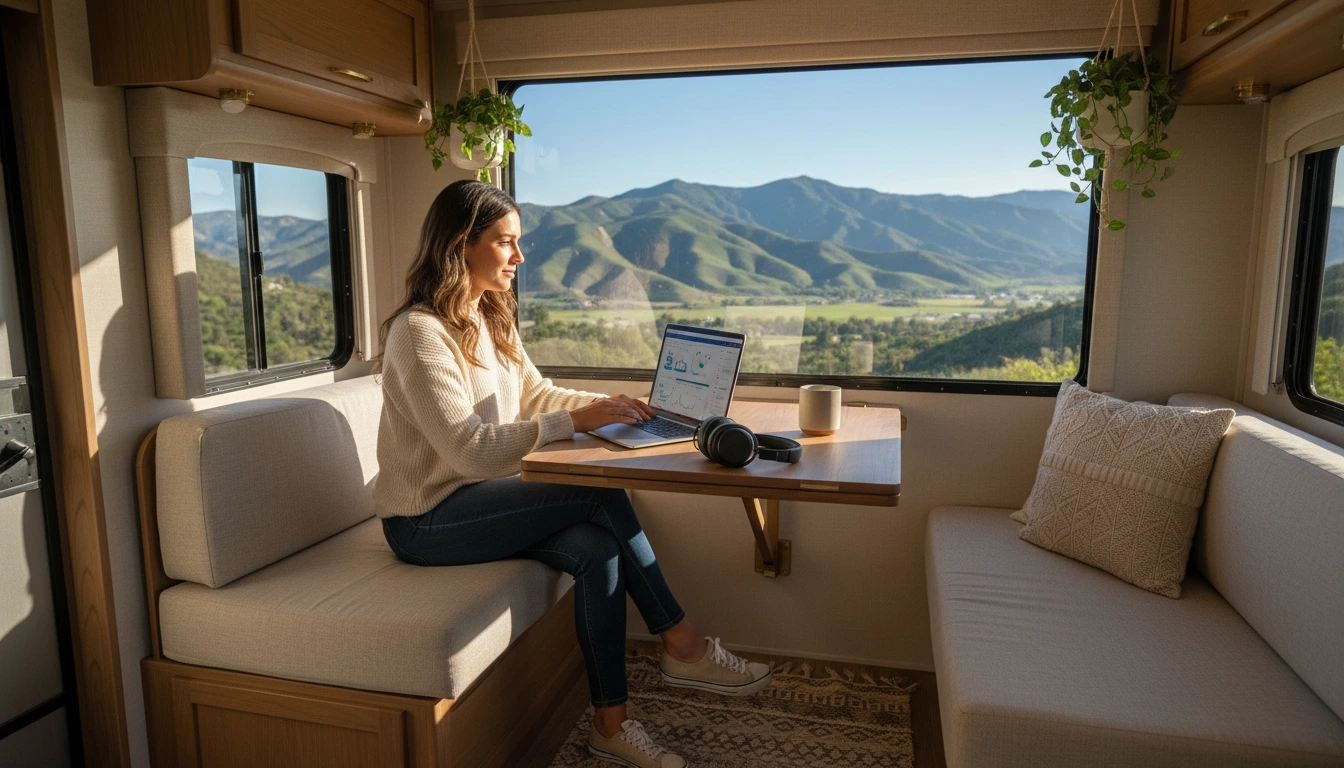
RV park living offers the opposite balance. Moving your RV costs whatever it costs to drive it. For travelers, remote workers, retirees who want to spend winters in one climate and summers in another, or anyone in a life transition, that flexibility is genuinely valuable in a way that’s hard to quantify until you’ve lived without it.

This is one reason long-term RV living is increasingly popular among remote workers who need stable housing with the option to relocate without financial penalty. It’s also why it’s a strong fit for traveling professionals who follow their work rather than being anchored to a single location.

Community and Lifestyle: The Intangibles

Both RV parks and mobile home parks vary enormously in community quality. The factors that produce real community in either setting are the same: on-site management that enforces standards, a stable resident base, and shared amenities that generate daily interaction. At Diamond Valley RV Park, the focus is on long-term residents — retirees, remote workers, and professionals who stay for months or years. Read more about community life at a long-term RV park. 

When a Mobile Home Park Might Be the Better Fit

This comparison isn’t meant to suggest that mobile home parks are always the wrong choice. For residents who have strong roots in a specific community, plan to stay in one location for 10+ years, and want the experience of owning a fixed structure, a mobile home park may offer a stability that suits their life.

But if you value flexibility, lower upfront costs, the ability to leave without financial penalty, and the freedom that comes from owning something you can drive away — the RV park model is almost certainly the stronger choice. 

Making the Decision: Questions to Ask Yourself

  • How long do I plan to stay in one location? If the answer is uncertain, the flexibility of an RV park protects you.
  • Do I own or can I afford an RV? If yes, the RV park path has significantly lower total upfront cost than purchasing a manufactured home.
  • How important is mobility to my lifestyle or career? Remote workers, traveling professionals, and anyone in life transition should heavily weight the portability of RV living.
  • What are the full monthly costs? For mobile home parks, include home maintenance, insurance, taxes, and depreciation risk.


Also worth reading: Palm Springs vs. Hemet — which Southern California area is better for RV living?

Scroll to Top