Diamond Valley RV Park logo

Is It Safe to Live in an RV Park? What First-Timers Need to Know

It’s one of the first questions people ask, and one of the last they’ll admit to asking out loud: is it actually safe to live in an RV park? The hesitation makes sense. For most people, an RV park conjures images from old road trip movies — a transient place, a collection of strangers passing through, little in the way of rules or accountability.

That image doesn’t match the reality of a well-managed long-term RV community like Diamond Valley RV Park in San Jacinto. But it persists, and it stops real people from exploring an option that might genuinely improve their quality of life. So let’s answer the question directly — with the factors that actually determine safety, and the specific standards that separate parks worth living in from those that aren’t.

What 'Safe' Actually Means in a Park Context

Safety in an RV park has several distinct dimensions:

  • Physical security — Is access controlled? Is the property monitored? Are residents protected from uninvited outsiders?
  • Community accountability — Do residents know each other? Is management responsive? Are rules enforced consistently?
  • Environmental safety — Is the infrastructure (electrical, water, sewer) properly maintained? Are fire risks managed?
  • Personal stability — Is this a stable place to live long-term, or is it chaotic and high-turnover?

A well-run park addresses all four. A poorly run one fails on at least one — and usually several. The key insight is that safety in an RV park is almost entirely a function of management quality, not of the RV park category itself.

The Role of Management: Why It's the Single Biggest Safety Factor

Every meaningful safety feature in a residential RV park — gated access, rule enforcement, maintenance response, community standards — runs through management. A park with on-site management that knows residents by name, responds to issues promptly, and enforces its rules consistently is fundamentally different from one with absentee ownership.

At Diamond Valley RV Park, management operates on-site Monday through Friday, 9 AM to 4 PM. That visibility matters. When you’re evaluating any long-term RV park, management quality is the first and most important question. Ask current residents. Check online reviews specifically for comments about how management handled problems, not just how nice the park looks in photos.

Gated Access: What It Does and Doesn't Provide

Gated entry is a meaningful safety feature — and a commonly misunderstood one. A gate doesn’t make a community impenetrable. What it does is control the default: uninvited visitors can’t simply drive in without interaction. That friction alone eliminates a significant category of opportunistic issues.

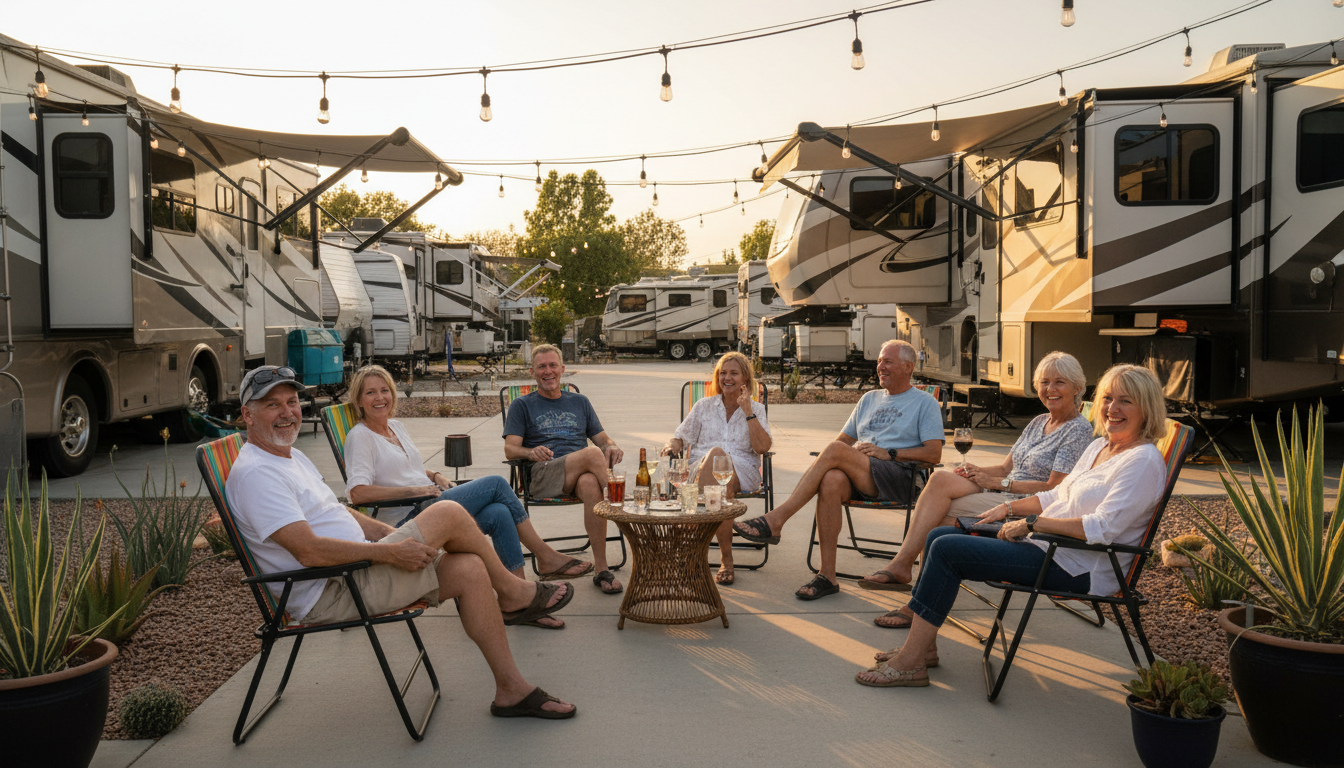
Diamond Valley RV Park is a fully gated community with controlled access 24 hours a day. For residents coming from urban apartment living — where a building’s front door might be propped open, and parking lots are shared with anyone — gated park living at DVRV often feels meaningfully more secure. The combination of a smaller resident community, where people recognize each other’s vehicles and faces, and controlled perimeter access creates an environment where anomalies stand out.

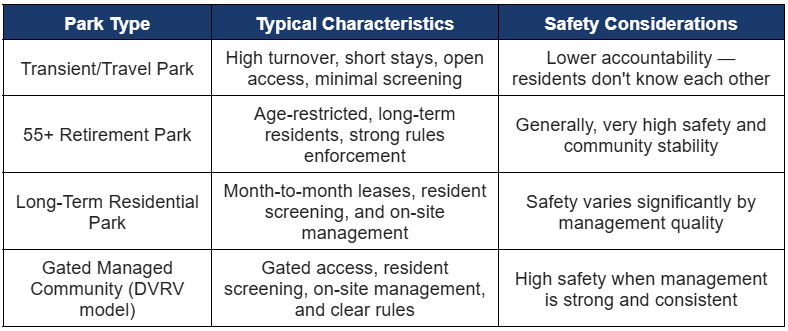
Comparing Park Types: Not All RV Parks Are the Same

It’s important to distinguish between types of RV parks when assessing safety. Understanding the difference between RV parks and mobile home parks is a good starting point — the safety profiles and management models differ significantly.

Fire Safety and Infrastructure Maintenance

RV parks are regulated as Special Occupancy Parks under the California Health and Safety Code, overseen by the California Department of Housing and Community Development (HCD). Parks must meet specific standards for site spacing, fire lane access, utility connections, and infrastructure maintenance to operate legally.

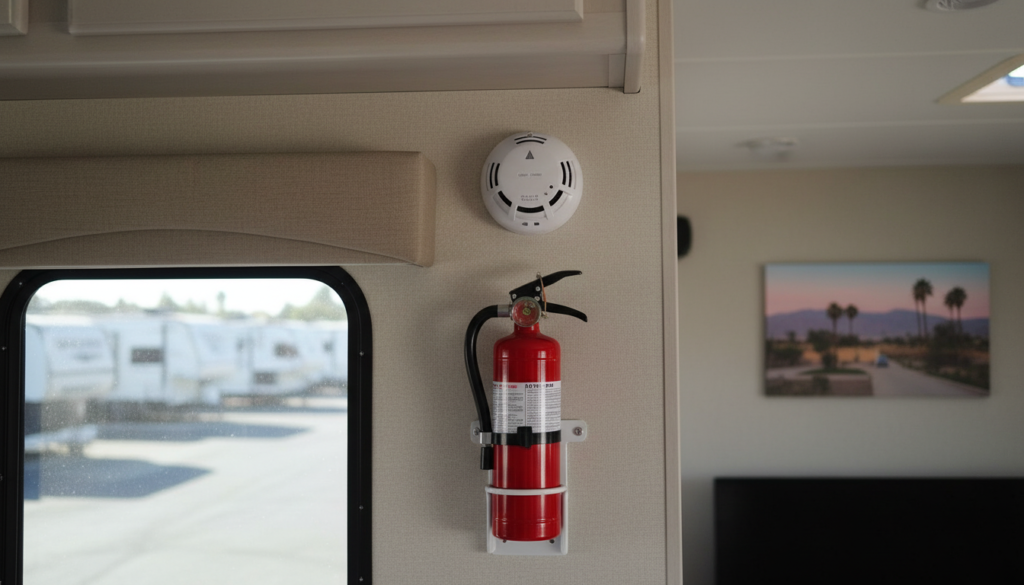
From a resident standpoint, fire safety in an RV comes down to fundamentals: a working propane detector and CO detector, a functional fire extinguisher in the kitchen area, and smoke alarms in sleeping areas. The National Fire Protection Association (NFPA) publishes standards for RV fire safety that apply to both the units and the parks they operate in.

Red Flags to Watch for When Evaluating a Park

  • No visible on-site management. If you can’t reach a real person who physically works on the property, that’s a fundamental problem.
  • Open, uncontrolled access. If anyone can drive in without being admitted by a resident or management, the park isn’t a community — it’s an open lot.
  • No application or screening process. A park that accepts anyone without a background check has made no commitment to the character of its resident base.
  • Maintenance was deferred visibly. Cracked roads, non-functional utilities, and deteriorating common areas signal a management team not investing in the property.
  • Online reviews mention management being unresponsive to safety or maintenance concerns. Look for patterns, not isolated complaints.

The Honest Answer: It Depends on the Park

Is it safe to live in an RV park? Yes — in the right park. A well-managed, gated, resident-screened long-term RV park can be meaningfully safer in daily experience than an open apartment complex in a dense urban area. Diamond Valley RV Park was built to meet that standard: gated access, on-site management, a clear application process, and a community of long-term residents who know and look out for each other.

The question isn’t whether RV parks are safe — it’s whether the specific park you’re considering has done the work to earn that answer. Read more about how to choose the right long-term RV park, or start by visiting DVRP, talking to current residents, and asking management directly. The answers you get will tell you everything you need to know.

Also, if you’re weighing RV park living against other options, see our side-by-side breakdown: RV Park vs. Mobile Home Park — What’s the Real Difference?

Scroll to Top